 Stonebit Resources
Take gas that has no home. Put it to work.
Producing wells generate associated gas that often has no pipeline route, no economic buyer, and no business case beyond the flare. We change that with a purpose-built load at the wellhead.
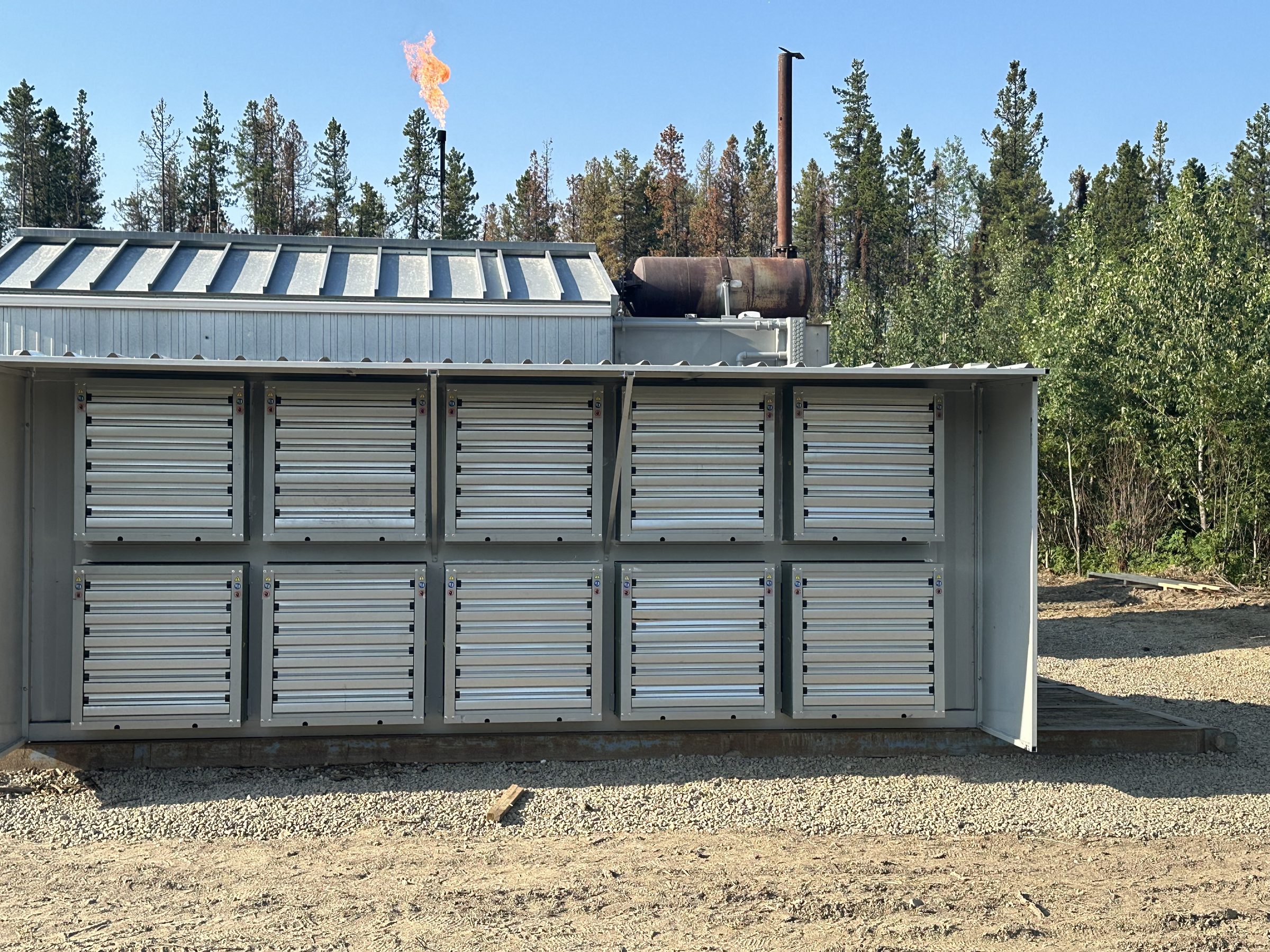
Flaring is a cost center with no customer.
Associated gas is a by-product of oil production. Without a takeaway line, operators have few options: vent it, flare it, or shut in the well. Each of those carries emissions, pressure against AER and BC ER flare and vent limits, or lost barrels. Marginal wells with recoverable oil get shut in because the gas side is unmanageable.
We approach the same molecule differently. A well-designed behind-the-meter load lets operators keep producing, reduce the flare, and earn from an input that was previously thrown away.
Molecule to megawatt to hash rate.
Every site is built to the same playbook. Gas is conditioned. Power is generated, controlled, and paralleled. Mining load is metered. Operations are supervised. Nothing in the chain is guesswork.
Capture and condition
We tap associated or stranded gas at the wellsite, condition it for engine use, and meter it from the inlet. Composition and BTU are tracked continuously.
Convert to power
Natural-gas generators produce site power in the 300 to 600 kW range per pad, sized to the gas available. Paralleling and load sharing are managed by ComAp controls.
Put it to work
Containerised Bitcoin and Kaspa miners take the load. Airflow, cooling, and cable management are designed for the climate, not copied from a data-centre reference.
Watch and respond
SCADA gives real-time visibility, Starlink keeps us connected, and a maintenance runbook drives response. We see the site even when no one is on it.
Modular. Containerised. Quietly industrial.
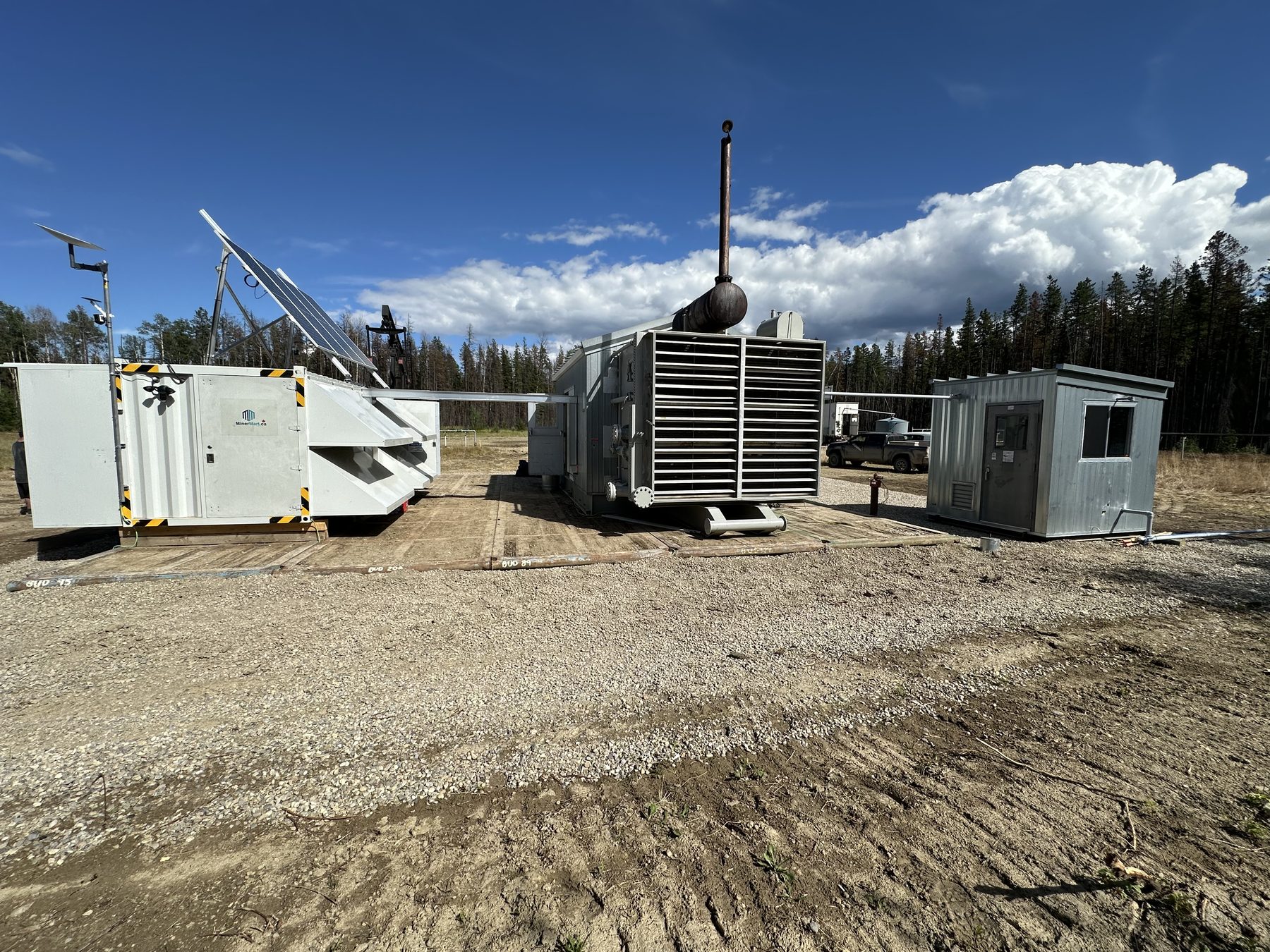
A Stonebit pad is deliberately low-drama. A generation package, a containerised mining block, a small control shack, and the network that ties them together. No neon. No scaffolding left over from the install. Airflow and louvers sized for Canadian winters and northern summers.
- Sites typically 300 kW to 600 kW of active mining load.
- Built out on wood-matting pads, fully reversible.
- Pad commissioning measured in weeks.
- Scalable with modular additions as gas permits.
Three things stack on top of each other.
Input cost is close to zero.
Gas that had no buyer becomes the cheapest reliable power we can get to, without grid tariffs, demand charges, or delivery fees in the middle.
Miners reward uptime, not peak.
Crypto mining is a steady-state load that happily runs at the generator’s efficient sweet spot, 24 hours a day, seven days a week.
The infrastructure is reversible.
Containers, skids, and tie-ins can leave as cleanly as they arrived. The pad stays a pad. That matters to landowners, regulators, and operators.
The same approach from three different angles.
Depending on where you sit, this reads as an energy business, a hosting option, or a way to rescue a producing lease. Pick the view that matches your role.